
Blog
The Complete Steel Guide for Replica Swords: 1045 vs. 1095 vs. Stainless Steel


A replica sword is more than a decorative object. The material used to create the blade determines how it performs, how long it lasts, how much maintenance it requires, and whether it is suitable for display, training, or practical use. Many buyers focus on appearance, historical accuracy, or price, but the steel type is one of the most important factors when choosing a quality replica sword.
The three most common materials found in replica swords are 1045 carbon steel, 1095 carbon steel, and stainless steel. Each material has a different balance of hardness, toughness, flexibility, corrosion resistance, and cost. Understanding these differences helps collectors avoid buying a sword that does not match their expectations.
Why Sword Steel Matters
Steel is an alloy of iron and other elements, with carbon being one of the most important components. Carbon content influences how hard the blade can become after heat treatment. However, more carbon does not automatically mean a better sword. A high-quality blade requires the correct combination of material, manufacturing process, and design.
| Steel Characteristic | Importance |
|---|---|
| Hardness | Controls edge retention and resistance to deformation. |
| Toughness | Determines how well a blade absorbs impact. |
| Flexibility | Helps prevent sudden cracking. |
| Corrosion Resistance | Affects maintenance requirements. |
| Heat Treatment | Creates the final performance characteristics. |
1045 Carbon Steel Replica Swords
1045 carbon steel is one of the most popular choices for affordable functional replica swords. The name refers to its approximate carbon content of 0.45 percent. This makes it a medium-carbon steel that provides a practical balance between durability and affordability.
For beginners, 1045 steel is often a sensible choice because it is more forgiving than extremely hard steels. A sword made from 1045 can handle normal handling and light practice better than many decorative blades.
Benefits of 1045 Steel
- Affordable price point.
- Good balance between hardness and flexibility.
- Less likely to become excessively brittle.
- Suitable for many entry-level functional replicas.
Limitations of 1045 Steel
- Lower edge retention compared with 1095.
- Requires oiling to prevent rust.
- Usually not chosen for premium performance swords.
1095 Carbon Steel Replica Swords
1095 carbon steel contains approximately 0.95 percent carbon. This higher carbon content allows manufacturers to create harder blades with excellent edge retention. Because of these characteristics, 1095 is popular among experienced sword collectors and enthusiasts.
However, hardness comes with responsibility. A very hard blade can become brittle if it is not properly heat treated. The manufacturing process is just as important as the steel itself.
Benefits of 1095 Steel
- Excellent edge retention.
- High hardness potential.
- Popular for serious collecting.
- Good choice for quality functional replicas.
Limitations of 1095 Steel
- Requires frequent maintenance.
- More vulnerable to rust.
- Needs experienced manufacturing techniques.
Stainless Steel Replica Swords
Stainless steel is widely used for decorative replica swords because it offers excellent corrosion resistance. These swords are popular among collectors who want attractive display pieces without the maintenance requirements of carbon steel.
However, buyers should understand that stainless steel is not automatically a functional sword material. Many stainless replica swords are designed only for decoration and may not tolerate impact.
Benefits of Stainless Steel
- Excellent rust resistance.
- Low maintenance.
- Great appearance for displays.
- Ideal for decorative collections.
Limitations of Stainless Steel
- Many models are not designed for cutting.
- Performance varies between alloys.
- Some decorative blades can be brittle.
Complete Steel Comparison
| Feature | 1045 | 1095 | Stainless Steel |
|---|---|---|---|
| Carbon Content | Medium | High | Varies |
| Hardness | Medium | High | Varies |
| Edge Retention | Good | Excellent | Limited on many models |
| Rust Resistance | Low | Low | High |
| Maintenance | Moderate | High | Low |
| Best For | Beginners | Advanced collectors | Display |
The Importance of Heat Treatment
Heat treatment is one of the most overlooked parts of sword manufacturing. It changes the internal structure of the steel and determines the final balance between hardness and toughness.
A poorly heat-treated 1095 sword may fail while a properly treated 1045 sword performs reliably. Buyers should research manufacturing quality rather than focusing only on the steel name printed in a product description.
Full Tang Construction and Sword Quality
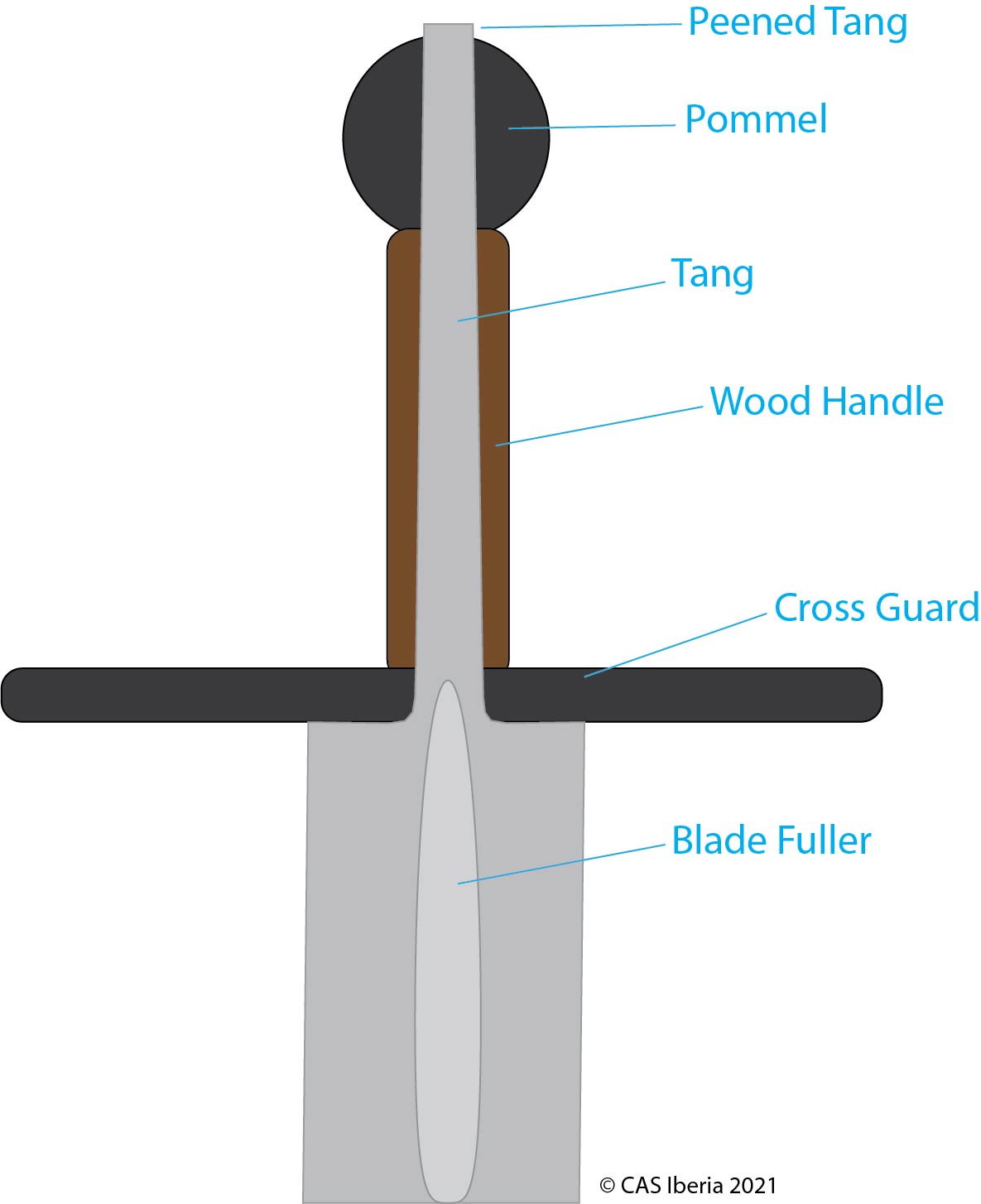
The steel type is only one part of a good sword. Construction quality is equally important. Functional replica swords should ideally have a full tang design, where the blade steel extends through the handle.
| Construction | Recommended Use |
|---|---|
| Full Tang | Functional replicas and training |
| Partial Tang | Light handling and display |
| Decorative Assembly | Display only |
Safety Precautions
A replica sword should always be treated responsibly. Decorative swords are not designed for impact, and using an unsuitable blade for cutting or training can result in damage or injury.
- Keep swords away from children.
- Inspect handles and fittings regularly.
- Never swing near people or valuable objects.
- Use protective equipment during training.
- Follow manufacturer instructions.
Maintenance Guide for Replica Swords
| Task | Recommendation |
|---|---|
| Cleaning | Remove fingerprints after handling. |
| Oil | Protect carbon steel blades regularly. |
| Storage | Keep away from moisture. |
| Inspection | Check fittings before use. |
Which Replica Sword Steel Should You Choose?
The correct choice depends on your goals. A beginner looking for a reliable first sword may prefer 1045 carbon steel. A serious collector interested in performance may choose 1095. Someone who wants a beautiful wall display with minimal maintenance may prefer stainless steel.
- Best beginner choice: 1045 carbon steel.
- Best performance choice: 1095 carbon steel.
- Best display choice: Stainless steel.
Final Verdict
The best replica sword is not determined by steel alone. Quality depends on the combination of steel, heat treatment, construction, craftsmanship, and intended purpose. Understanding the differences between 1045, 1095, and stainless steel allows buyers to choose a sword that provides the right balance of appearance, performance, and maintenance.
